Prologue
What this site is — and why
"AKTE HOFFE" is for lovers and haters of the TSG alike. History becomes legend, legend becomes myth. And myth becomes cult — or a reason for eternal second-hand embarrassment, depending on the event.
The transfer giant from the village. Dietmar Hopp turned a district league club into a Bundesliga side — and was hated by ultras across the country for it. Nagelsmann launched his coaching career here at 28, Firmino and Süle were moulded into world stars. TSG Hoffenheim is the club that proves money and a concept can overcome football romanticism — to the annoyance of many.
But this site goes beyond mere celebration or hatred. Akte Hoffe is structured in three parts: The Club Dossier tells the story — triumphs, tragedies, scandals, heroes and failures across 12 chapters. Match Intelligence delivers the live data a professional needs: squad, statistics, head-to-head, injuries, form. And Predictions brings it all together — with prediction markets.
Prediction markets are not gambling. In traditional sports betting, the masses lose — the money goes to the bookmaker who has built in his margin. Betting exchanges are similar: commissions on winnings, liquidity shortages and spread eat into returns. Prediction markets work fundamentally differently. There is no bookmaker who lets the house win. Instead, money flows from those who don't know to those who get it right — with risk management, portfolio diversification and disciplined capital deployment. You can trade 24/7, build and close positions, and wait for the binary resolution of the event. Those who understand it are not speculating — they're engaged in systematic trading.
Akte Hoffe is part of Akte Bundesliga — the same concept for all 18 Bundesliga clubs. Each club gets its own dossier, its own intelligence, its own predictions. The big picture can be found at aktebundesliga.net.
Profile
Facts, figures and milestones
Steckbrief – Facts, figures and milestones
Turn- und Sportgemeinschaft Hoffenheim 1899 e. V. (TSG 1899 Hoffenheim for short) is based in the Sinsheim district of Hoffenheim, Baden-Württemberg. Founded in 1899, the club has approximately 11,400 members (as of December 2019), making it one of the smaller Bundesliga clubs by membership.
The club's football department was spun off into TSG 1899 Hoffenheim Fußball-Spielbetriebs GmbH, based in Zuzenhausen, in 2005. The men's first team has played in the Bundesliga since 2008/09. Home matches are played at the Rhein-Neckar-Arena (PreZero Arena) in Sinsheim, opened in January 2009; before that, the Dietmar-Hopp-Stadion in Hoffenheim and the Carl-Benz-Stadion in Mannheim served as venues. The Rhein-Neckar-Arena has a capacity of 30,150.
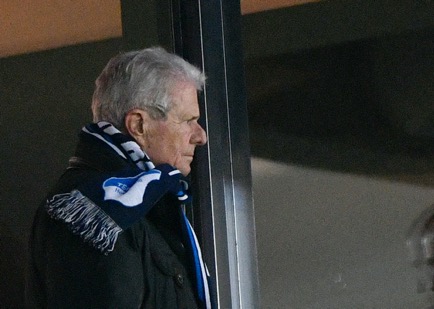
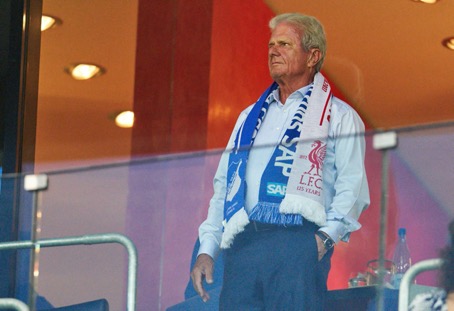
SAP co-founder Dietmar Hopp held 96 per cent of the shares in TSG 1899 Hoffenheim Fußball-Spielbetriebs GmbH as of December 2019, controlling both club and company. This was possible because he had already supported TSG Hoffenheim for more than 20 years at the time of the takeover, enabling him to assume the majority of voting rights in July 2015 despite the DFB's 50+1 rule.
Like many German clubs, TSG Hoffenheim emerged from a gymnastics club. Gymnastics, far more popular in the late 19th and early 20th centuries, was initially the main pillar. In the late 1920s, a handball section was created — field handball, as was customary at the time. When field handball was supplanted by indoor handball, the section was dissolved in the early 1970s due to the lack of a suitable hall.
The club's rhythmic gymnasts have been successful. Founded in 1978, the section competed at the German championships in 1983 and 1985. Today, the TSG's football youth academy in Zuzenhausen is considered one of the best in Germany.
Good to Know
What few people know
1899 Hoffenheim is a village club. That is well known. Less well known is that the team from the Bundesliga's smallest location has the longest journey to an away match: 745 kilometres to Werder Bremen.
Considering only the 3,266-inhabitant community of Hoffenheim, the TSG replaced the previously smallest Bundesliga town Unterhaching (approx. 22,000 inhabitants) in 2008. Adding the population of Sinsheim, where the TSG play their matches, the total comes to 36,000 — still behind "Haching." Before the Munich suburban club entered the Bundesliga in 1999, the Saarland club FC 08 Homburg with 44,000 inhabitants held the title of "smallest Bundesliga town" for over 20 years.
This rise was made possible by the massive investment in the club and company by SAP co-founder Dietmar Hopp. With his financial support, the ascent from Kreisliga A to the Bundesliga was achieved between 1990 and 2008. That is well known. Less well known is that, according to legend, the trigger for Hopp's involvement was a defeat in the relegation match against 1. FC Stebbach (2-4 after extra time) and the club's relegation from the Bezirksliga in 1989.
TSG Hoffenheim's rise was bought with piles of money and expensive signings, distorting competition — that is how many "Hoffe haters" see it. But it is only partly true. Rather, the TSG is a transfer giant from the village with a nose for players who can be sold at a premium. Examples? In the nine years to December 2019, the TSG transferred ten players for eight-figure sums, generating a total of over 245 million euros in fees.
No.PlayerSeason statsTransferred toFee1Joelinton19/20Newcastle€44m2Firmino15/16Liverpool€41m3Demirbay19/20Leverkusen€32m4Schulz19/20Dortmund€25.5m5Süle17/18FC Bayern€20m6Volland16/17Leverkusen€20m7Eduardo10/11Kazan€20m8Gustavo10/11FC Bayern€20m9Wagner17/18FC Bayern€13m10Sigurdsson12/13Tottenham€10mTotal€245.5m Fig. 1.13.2 The ten most expensive player sales by TSG Hoffenheim since the 2010/11 season. Source: Transfermarkt.de
What also rarely makes the media: Hopp played for the club in the 1960s, when it was nothing more than a village team. His attachment is genuine, personal — not a vanity project. He grew up in Hoffenheim and returned as a benefactor.

For the Haters
Embarrassing disasters and major defeats
Soaring high, falling deep: Hoffenheim stormed to the "autumn championship" as promoted newcomers in the 2008/09 Bundesliga — only to collapse in the second half and finish 7th. From heroes to zeroes in six months.
0-4 at Berliner AK: TSG's greatest footballing embarrassment is found in the first DFB-Pokal round result lists. In August 2018, the Bundesliga side were knocked out 0-4 by fourth-division Berliner AK 07.
Please not to Munich! FC Bayern would not be FC Bayern if they did not comment on the upstart from the Kraichgau in their customary ironic fashion. When asked about Hoffenheim's autumn championship in 2008, Uli Hoeneß quipped: "If they become champions, I'll eat a broomstick."
Champions League in the village? That's just not on! The 2018/19 Champions League debut was equally unsatisfying. Hoffenheim were eliminated in the playoff round by Liverpool (1-2, 0-4) — a sobering reality check on the European stage.
Disaster year 2012/13: In this season, it seemed as though Hoffenheim would drop out of the Bundesliga after five years. Under coaches Markus Babbel and then interim coach Frank Kramer, the team tumbled into a relegation battle before being saved in the play-offs against Kaiserslautern.
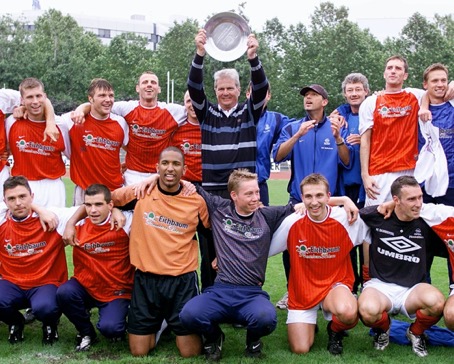
Heaviest defeat in professional football: 1-7 in the 2011/12 season — the 1-7 at FC Bayern München on matchday 32 represents Hoffenheim's worst ever professional defeat. Already safe from relegation, the team capitulated in Munich.
Heaviest home defeat: The worst home loss came in the 2012/13 Bundesliga season on matchday 2 against Borussia Dortmund: 0-3.
Longest losing streak: The longest losing run in professional football occurred twice. In the 2009/10 and 2012/13 seasons, Hoffenheim lost five consecutive matches.
Most defeats in a season: 19 losses came in the 2012/13 season. A negative record for the Kraichgauer.
For the Lovers
Key triumphs and major victories
BVB — My dearest enemy: Borussia Dortmund and their fans campaigned against the upstart from the Kraichgau from the very start. All the more satisfying, then, that Hoffenheim's record against BVB is remarkably good. The Kraichgauer have won more Bundesliga matches against Dortmund than against any other "top club."
"DFB-Pokal — The really big thing": Kristian Arambasic is the man who fired up his teammates in the dressing room with a legendary half-time speech. The result: a 3-2 comeback win against Borussia Dortmund in the 2014/15 DFB-Pokal second round after being 0-2 down.
The greatest success came for 1899 Hoffenheim under coach Julian Nagelsmann: In the 2017/18 season, "Hoffe" stormed to 3rd place — their best-ever Bundesliga finish — and qualified for the Champions League group stage for the first time.
Pogo at the Betzenberg: All of football Germany held its breath during the 2013 relegation play-off against "a village of indomitable Hoffenheimers." The TSG won 2-1 on aggregate against 1. FC Kaiserslautern, surviving on a dramatic away-goals night at the Betzenberg.
On the horns: No Bundesliga club has been hit harder by the Kraichgauer than 1. FC Köln on March 31, 2019 — a 6-0 thrashing that remains Hoffenheim's biggest top-flight win.
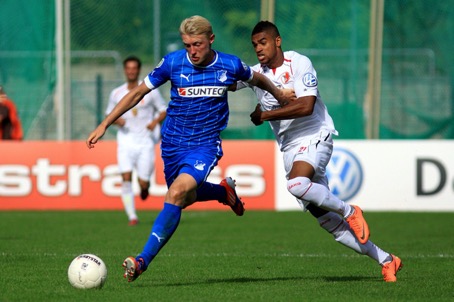
Berlin is worth a visit: On December 21, 2014, the representatives of the smallest Bundesliga location won at the biggest — 2-0 at Hertha BSC in the Olympiastadion.
The 2007/08 season: Hoffenheim's most victories in the top two divisions came in the 2007/08 promotion season in the 2. Bundesliga — 21 wins, 65 points and a triumphant return to the top flight.
Best goal difference: Hoffenheim's "Nagelsmanners" recorded their best Bundesliga goal difference in the 2017/18 season: +22, with 66 goals scored and 44 conceded.
Longest winning streak: TSG Hoffenheim's longest winning run came in the 2007/08 2. Bundesliga season — seven consecutive victories that propelled the team to promotion.
Most Important Persons
The men who shaped the club
The SAP co-founder: In the little village of Stebbach, everything changed for TSG Hoffenheim on June 4, 1989. The team lost 2-4 after extra time and were relegated to the Kreisliga after a disastrous season. One of the roughly 1,000 spectators at this tragedy was Dietmar Hopp — and he decided to act. What followed was the most remarkable rise in German football history…
The professor: The "architect of success" arrived in Hoffenheim in 2006 and managed to lead the team from the third tier to the Bundesliga within two seasons. The promotion to the 2. Liga was immediately followed by a march through to the top flight. After the sensational "autumn championship" in 2008, Rangnick left Hoffenheim in 2011 and went on to shape the footballing philosophy of the Red Bull empire.…
The first Bundesliga goal: The Bosnian striker scored Hoffenheim's first-ever Bundesliga goal. On the opening matchday in August 2008, in the 3-0 win at Energie Cottbus, he netted in the 18th minute. In October he was named "Player of the Month," then became autumn champion with Hoffenheim…
The Brazilian world star: The Brazilian striker secured a 1-0 home win over Eintracht Frankfurt with his first Bundesliga goal on April 16, 2011. When Firmino arrived from Brazilch Hoffenheim wechselt, bezeichnet ihn die lokale „Rhein-Neckar-Zeitung" als sportlichen Fehlgriff. Die vier Mil…
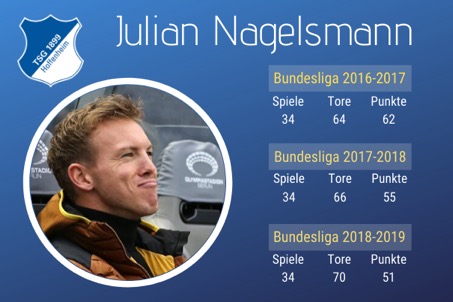
The boy coach: The youngest successful coach in Bundesliga history at the time first stepped into the spotlight in Hoffenheim. As a youth coach, he became the youngest U19 championship-winning coach with the TSG's U19s. In 2015, he became head coach at just 28 — and promptly led Hoffenheim to a Champions League place by 2018.…
Personae Non Gratae
The men fans love to hate
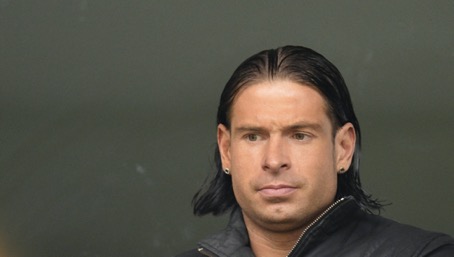
The misunderstanding: Eleven competitive matches with only one clean sheet — that is the bitter record of the "goalkeeper yob" at the TSG. According to football legend, Wiese turned down an offer from Real Madrid in 2012 at the urging of his agent Roger Wittmann, only to move to the Rhine-Neckar region instead. A fiasco that ended with Wiese being sidelined and eventually pursuing a career in professional wrestling.…
The ego-shooter: Self-promoter Sandro W. made headlines during his time at Hoffenheim with his loud opinions and on-pitch self-staging. The 1.94-metre-tall striker always liked to talk — a lot — and now, having arrived on the big football stage, people were finally listening…
Haters gonna hate: In 2007, before a match between Mainz and Hoffenheim, Christian Heidel was quoted in the Frankfurter Allgemeine Zeitung saying „Schade, dass so eine Mannschaft einen der 36 Plätze im Profi-Fußball wegnimmt“ zitiert. „Scheiß Millionäre“, „Ohne Dietmar wärt ihr gar nicht hier…
Joachim Watzke and BVB Ultras — No comment: The Borussia Dortmund CEO likes to position himself as the chief critic of investor-driven models in professional football. Yet he is the head of the only stock-exchange-listed football club in Germany. The football romantic also has a few choice words for "Hoffe"…
Ultras — No comment: Autumn 2008 — even among football fans, the Hoffenheim project drew disapproval as its success grew. Dortmund supporters displayed a banner with Hopp's likeness, crosshairs and the inscription: "Hasta la vista Hopp!" The DFB's sports tribunal subsequently sought to crack down with stadium bans…
Tragic
Those who suffered misfortune
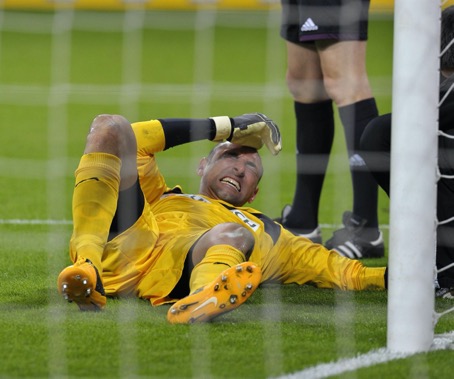
Heurelho Gomes — Wrong decision: Hoffenheim and their goalkeepers is a tricky subject. No language skills, no match practice and a debut after just one training session — those were the ingredients for a disastrous start in the TSG goal. The loan signing from Tottenham, flown in as a replacement for the discarded Tim Wiese, made more headlines during his time at the TSG (January 31 to June 30, 2013) through YouTube bloopers than through saves.
Boris Vukčević — The car accident: Boris Vukčević began his football career at Hessian club SV Staufenberg in 1995. In summer 2008, he moved to TSG 1899 Hoffenheim's reserve team. On the final matchday of the 2008/09 season, he featured in the 3-2 away win at FC Schalke 04 in the Bundesliga. From the start of the 2009/10 season, he was also a regular in the first-team squad. On October 17, 2010, the 22-year-old was involved in a serious car accident that left him with severe brain injuries. Vukčević never played football again.
OMG — Oh My God
You can't be serious
Training group two: The 2013/14 season began with a complete squad overhaul in the Kraichgau. Players like Daniel Williams, Igor de Camargo and Chris had left the club. Previously established players like Tim Wiese, Tobias Weis, Edson Braafheid, Matthias Jaissle and Matthieu Delpierre were banished to the so-called "Training Group 2" by coach Markus Gisdol — effectively sidelined and put on gardening leave.
Cup embarrassments: 1899 Hoffenheim seem to despise the "shortest route to Europe" via the DFB-Pokal. Since their 2008 Bundesliga promotion, the club have never progressed beyond the quarter-finals. From 2017 to 2019, they exited in the second round three years running. Their last appearance in the last eight was in 2014/15 (as of December 2019), when they were eliminated after extra time at BVB.
No appetite for Hoffe: TV broadcaster Sky showed 266 Bundesliga matches in the 2018/19 season. An average of five million viewers tuned in on matchdays; the top matches between Borussia Dortmund and Bayern München each attracted over two million. But there were also matches "nobody" wanted to watch. In 2018/19, exactly four matches fell below the technical minimum audience threshold — and Hoffenheim featured in all four.
Fun Facts
Knowledge for blowhards, braggadocios and connoisseurs
That 1899 Hoffenheim is supported by Dietmar Hopp is common knowledge among German football fans. Less well known is this…
Hoffe and the goalkeepers: Tim Wiese was the unwanted passenger at 1899 Hoffenheim; Tom Starke was the fans' favourite. TSG coach Markus Babbel apparently saw things differently in summer 2012 and chased the keeper away. Starke moved to Babbel's former club FC Bayern München, where he sat on the bench or in the stands until his retirement — winning six Bundesliga titles and the 2013 Champions League along the way. A dream career from the substitutes' bench.
The stand-in Kevin: Dortmund, May 18, 2013. For 1899 Hoffenheim, the final match of the season at BVB was do or die. Borussia led 1-0 for a long time — which would have meant relegation for "Hoffe." Then came an incredible turnaround from the visitors' perspective — in just five minutes! Sejad Salihovic (77') first converted a penalty for 1-1. Then BVB keeper Roman Weidenfeller was sent off, and substitute goalkeeper Kevin Großkreutz had to come on — an outfield player in goal. Hoffenheim scored again to win 2-1 and survived.
Pioneer of goal-line technology: On October 18, 2013, Bundesliga history was written in Sinsheim. Because of a hole in the net, Leverkusen's Stefan Kießling's header went into the TSG goal through the side netting. Nobody could explain it — Kießling celebrated half-heartedly, the Hoffenheim players stared at each other in bewilderment, and referee Felix Brych never received the information that millions of TV viewers already had. The "phantom goal" became the catalyst for introducing goal-line technology in the Bundesliga.
Kevin almost alone at the top: A Hoffenheim player holds the record for the fastest goal in Bundesliga history. Kevin Volland, who moved to Leverkusen in 2016, beat Bayern München goalkeeper Manuel Neuer just nine seconds after kick-off on August 22, 2015. Only Leverkusen's Karim Bellarabi (2014 in Dortmund) scored equally fast.
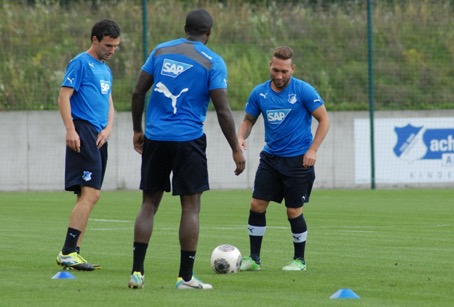
Hoffe's first international is Marvin Compper: The centre-back was nominated and selected by national coach Joachim Löw just once — for the 1-2 loss against England on November 19, 2008 in Berlin.
Only once in first place: TSG 1899 Hoffenheim have finished a season in first place just once in their recent history: in the Oberliga Baden-Württemberg in 2000/01. The jump from the Regionalliga to the 2. Liga came as runners-up in 2007, and the same applied to the Bundesliga promotion in 2008.
Julian Nagelsmann: Julian Nagelsmann took over as head coach of TSG Hoffenheim's first team in mid-February 2016. He was exactly 28 years, six months and 15 days old — the youngest head coach in Bundesliga history (as of December 2019). Though only if you exclude Bernd Stöber, who served as 1. FC Saarbrücken's interim coach for one match in 1976.
Special Moments
The billionaire and the Leberwurst
The "Miracle of Bern" on July 4, 1954 so thrilled 14-year-old Dietmar Hopp that just days later he turned up at TSG 1899 Hoffenheim. "I wanted to be Fritz Walter too," he explained years later in a feature on the Bundesliga club's website. Dietmar Hopp played his first match wearing his brother's knickerbockers and football boots — almost ten sizes too big.
Forget sports nutrition, food coaching and other bells and whistles — in 1950s Hoffenheim or at Eintracht Frankfurt's Bundesliga debut in 1963, sausage specialities on the menu were perfectly normal for footballers. Hopp studied communications engineering in Karlsruhe. He was a typical weekend commuter, like so many from the region. From Karlsruhe to Hoffenheim is barely 50 kilometres. And every weekend, his mother had a Leberwurst waiting for the hungry student.
Dietmar Hopp is a shrewd businessman. Long before he co-founded the software company Systemanalyse und Programmentwicklung (SAP) in 1972 with his four IBM colleagues — Hasso Plattner, Claus Wellenreuther, Hans-Werner Hector and Klaus Tschira — and rose to become chairman, billionaire and one of Germany's richest men, he had already secured his first sponsorship deal.
That the mighty FC Liverpool with Jürgen Klopp might one day come for a Champions League qualifier, that FC Bayern München with Hopp's golfing friend Franz Beckenbauer or Manchester City with Pep Guardiola might visit Sinsheim — in those days, that was the most bizarre footballing science fiction imaginable. The highlights in "Hoffe" were the derbies against FC Zuzenhausen. Barely four kilometres apart as the crow flies — that was the Kraichgau Clásico.
Everything changed in 1989. The Cold War was over and billionaire Hopp decided to lend financial support to his hometown club 1899 Hoffenheim, to whom he owed so many wonderful footballing memories. The TSG was languishing in the depths of Baden-Württemberg amateur football. That is, where it had always been. Hopp dropped by the little stadium more or less by chance and decided to get financially involved.
Hopp lives for "his" TSG Hoffenheim, but he never puts success above humanity. As the magazine Top in Fußball – Hoffenheim (special issue) wrote in 2009: "People always come first for Hopp. At SAP, they called him 'Vadder Hopp.' He made sure his employees were well looked after. His credo: 'Inspire performance through humanity and understanding.'" More than 350 million euros have flowed from Hopp into social, sporting and medical projects in the Rhine-Neckar region.
With 1899 Hoffenheim, Ralf Rangnick — the "football professor" — achieved the march from the Regionalliga to the Bundesliga in 2007/08. But not everyone was well-disposed towards the benefactor. Dietmar Hopp's financial involvement was criticised from day one in the German football elite. The main charge: Hopp, who acted only as a patron with no official position in the club, was allegedly buying success and distorting competition.
Watzke, meanwhile, continued to pour fuel on the fire. He spoke of a "disadvantaging of traditional clubs" — and his criticism fell on receptive ears among large parts of the Dortmund public. Hopp was promptly declared "public enemy number one in Westphalia" and faced insults, defamation and threats. Particularly notorious was a BVB fan banner depicting Hopp in crosshairs with the words: "Hasta la vista Hopp!"
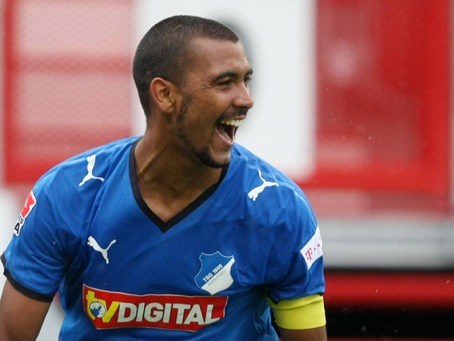
Sausage specialities as incentive for goals for a rather mediocre striker and a defeat against the neighbours — two special moments for TSG Hoffenheim — with far-reaching consequences for all of German football.
Wise Words
Quotes for eternity
"We hit the crossbar or the post 17 times. That's the only statistic in which we're top of the table." Julian Nagelsmann as TSG Hoffenheim coach in March 2019, after a 2-3 defeat against Eintracht Frankfurt
"What Ribéry cost in transfer fees and earns in wages — that would cover our entire squad for two or three years."
Ralf Rangnick as TSG Hoffenheim coach in 2009„Wenn sie flotte Sprüche hören wollen, dann müssen sie nach München gehen. Wenn sie flotten Fußball sehen wollen, dann sind sie bei uns genau richtig.“ Ralf Rangnick im Dezember 2008
"I am quite surprised. I have a good relationship with Franz Beckenbauer and Fritz Scherer, and I thought I had one with Uli Hoeneß too. But I must have been mistaken."
Hoffenheim patron Dietmar Hopp.Hooligans? "If people want to bash each other's heads in the forest, let them do it. Everyone has their hobby." And: "The ones with the small balls meet in front of the stadium, the ones with the big balls meet in the forest." Sandro Wagner